You do not need a spectacular destination to practise seeing. A wall, a shopfront or a junction can offer several different photographs, depending on where you stand and what you include. The useful exercise is to change the relationship between things, rather than simply make the same picture with a different filter.
I like a small, deliberate brief for this: find five distinct frames within one modest area, without moving anything or getting in anyone's way. The limit makes you inspect what is already there. It also keeps the exercise possible on an ordinary day.
Start with the obvious picture
Take the straightforward view first. It gives you a reference and gets the urge to move on out of the way. Then ask what makes the place recognisable. Is it a pattern, a colour contrast, a shape, a particular sign or the way people use the space?
Choose one of those characteristics for the next frame. A picture about repeated windows needs different treatment from a picture about someone waiting beneath them. Naming the subject stops the exercise becoming a collection of arbitrary angles.
Change one part of your position
Try a lower viewpoint, then a higher one if you can do so comfortably and safely. Move a little left or right. Step back to include context, then move nearer to isolate a detail. Notice which objects overlap differently each time.
Stay within ordinary accessible space. A distinctive photograph does not require climbing a barrier, entering a closed site or standing in a road. If the only promising angle creates a problem for you or other people, make a different picture.
Look for relationships, not oddity
An unusual angle alone may just make a familiar thing harder to recognise. I ask what the new position reveals: perhaps a curve echoes a window above it, or a bright wall makes a small silhouette readable. That relationship is the reason for the frame.
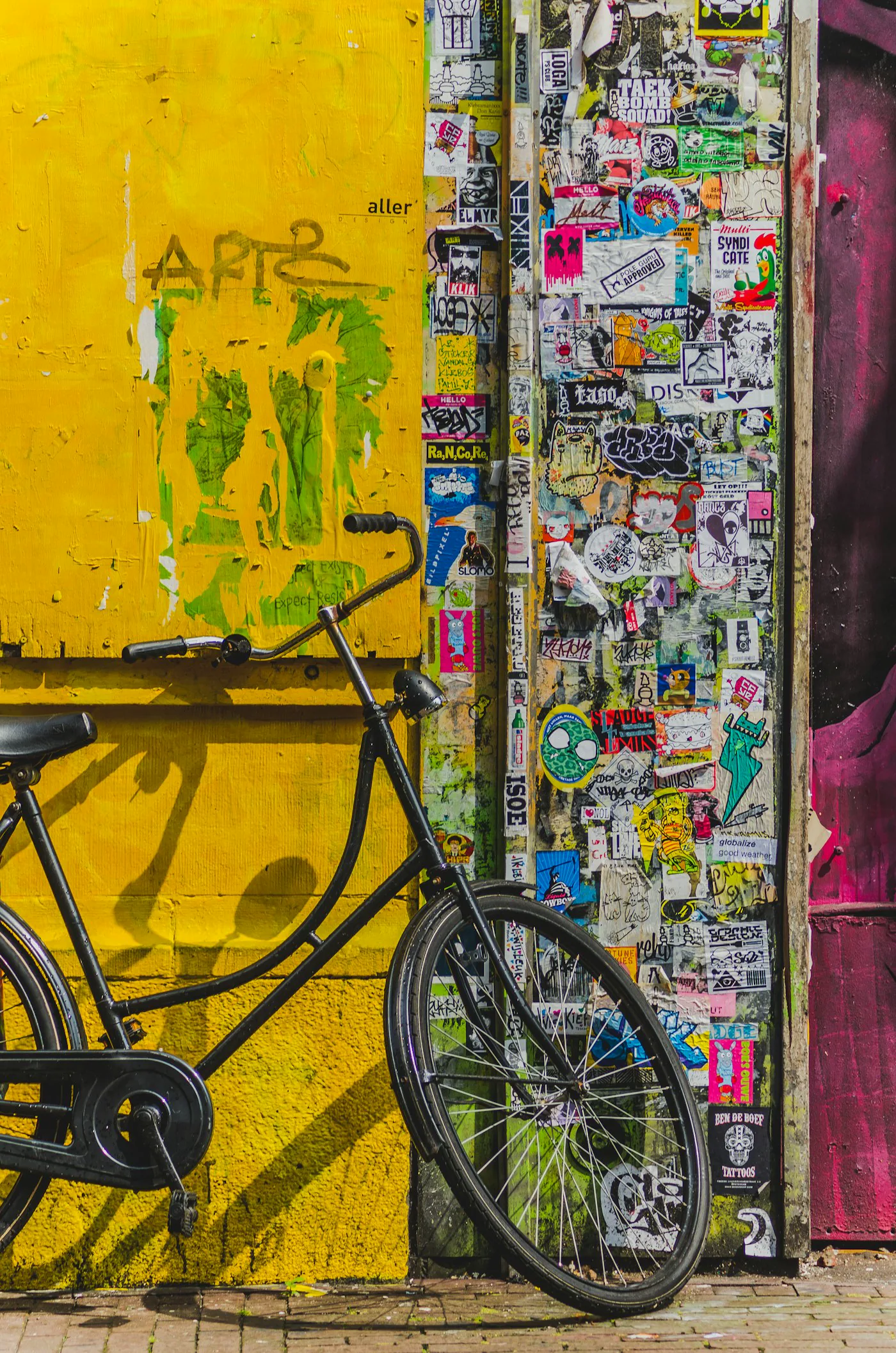
For example, imagine a bicycle beside a patterned wall. One view might describe the whole setting. A closer frame might connect the wheel's circle with shapes behind it. A lower position might separate the handlebars from a busy window. Those are different ideas, even though the subject has barely changed.
Include an unremarkable detail
Textures, repair marks and small traces of use can say something about a place that the broad view misses. Make the detail specific enough to be interesting, but decide whether it needs an accompanying wider frame to explain it.
Do not rearrange someone else's space simply to make the composition cleaner. Waiting for a less cluttered moment, changing position or accepting a little mess can preserve what interested you in the first place. The exercise is observation, not making everything look like a showroom.
Review the differences afterwards
Put the five frames together and write a short description of each. If three descriptions are effectively identical, they may be slight variations rather than different pictures. Choose the clearest version and use the spare attempts to explore another idea next time.
Keep one note about what changed the result most. Height, background separation and distance are useful things to repeat consciously. Returning to the same place then becomes a focused practice project, with a question to test rather than a hope that inspiration will turn up.