A moving subject gives you several possible photographs. You can describe a precise instant, suggest a direction or make motion itself the subject. I would decide which of those matters before treating every blurred edge as a mistake.
Intention does not remove the technical challenge. It gives you a way to judge the result. A sharp shoe and an unreadable face may be wrong for a portrait but perfectly relevant in a study of footwork.
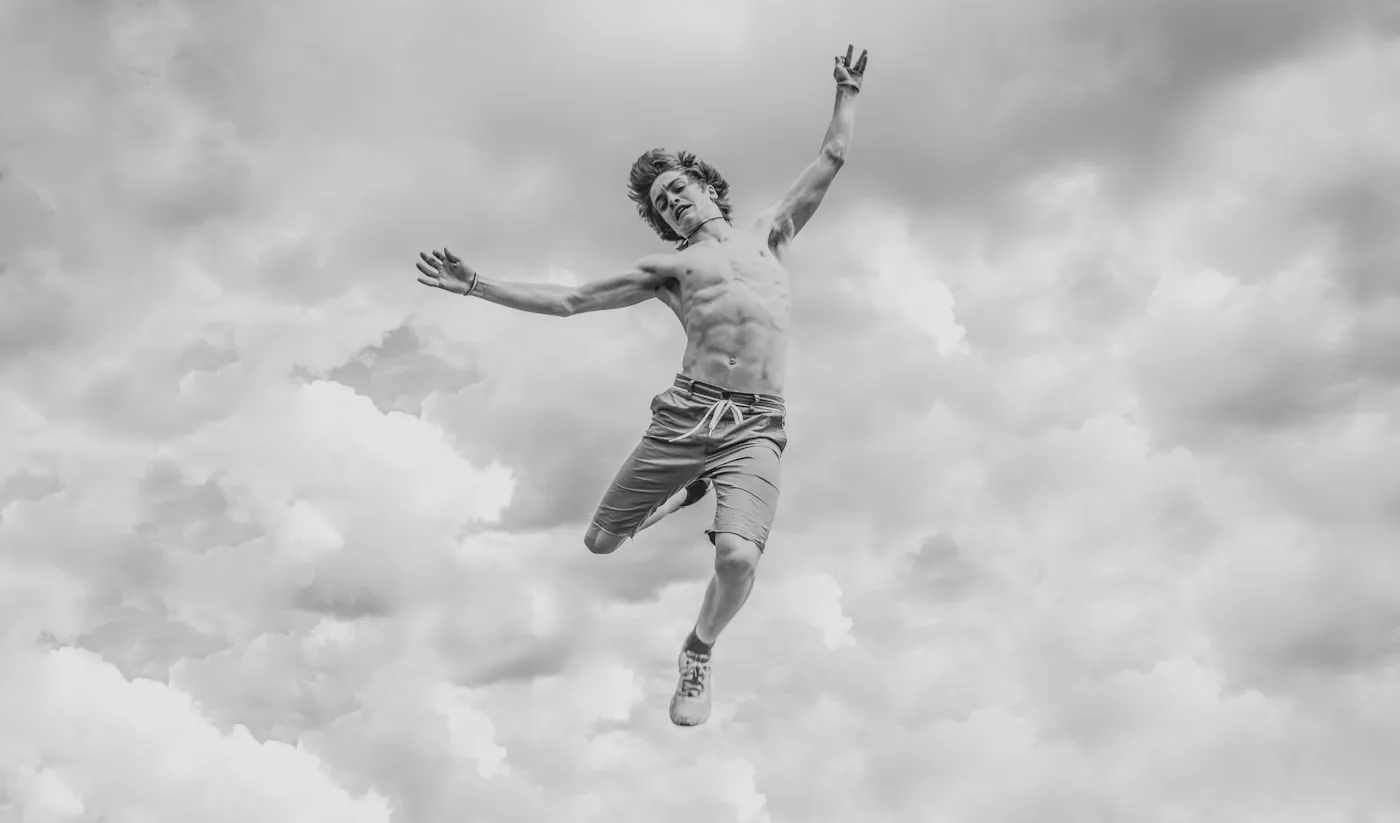
Understand the action before following it
Watch a few repetitions where the activity allows it. Notice the route, the point of maximum extension and where the subject is likely to pause or change direction. Timing becomes easier when you recognise what is about to happen.
Choose a position that stays outside the activity's path. Do not ask someone to repeat an unsafe movement for the photograph or distract them during a demanding action. A clear view is useful only if it leaves the participant and everyone nearby room to move normally.
Choose between freezing and describing motion
A shorter exposure can reduce motion blur; a longer one can record movement across the frame. The useful setting depends on the speed and direction of the subject, your position and the effect you want. I would test and inspect rather than prescribe one shutter speed for an entire activity.
If the intention is a sharp instant, check the important part of the subject after an initial attempt. If the intention is a sense of motion, ask whether the direction is readable and whether enough information remains to understand the picture. Accidental blur and deliberate blur can look similar until you consider the purpose.
Leave room for the action
Frame slightly ahead of where the important movement will happen. A subject travelling into the picture often reads differently from one about to leave it. Neither is automatically wrong, but a cramped edge can make an energetic frame feel accidental.
Watch the background too. A busy pattern behind a moving person can make their shape difficult to recognise. A position that gives them a quieter background may help more than a tighter crop made after the fact.
Practise with a repeatable, modest subject
An imagined exercise might use a friend walking along an agreed route, with their knowledge, while you compare a clear instant with a motion treatment. Keep the route and framing broadly similar. This makes it easier to understand the difference than starting with an unpredictable crowd.
Review timing separately from technical sharpness. You may have frozen the least informative part of the action. Compare body shape, the relationship to the surroundings and whether the image explains what is happening.
Select the frame that says something
A sequence of nearly identical action frames can be useful for analysis, but a short published selection needs a reason for each image. Choose the moment that communicates the action, rather than automatically selecting whichever has the crispest detail.
If the work is a sequence, preserve a truthful order and avoid implying a progression that did not occur. Add a factual caption where the activity needs explanation. Motion photography combines observation with timing, and a small controlled experiment can help you practise each decision without confusing them.